

SCW75 launches to recognise the architects of scientific computing’s new era
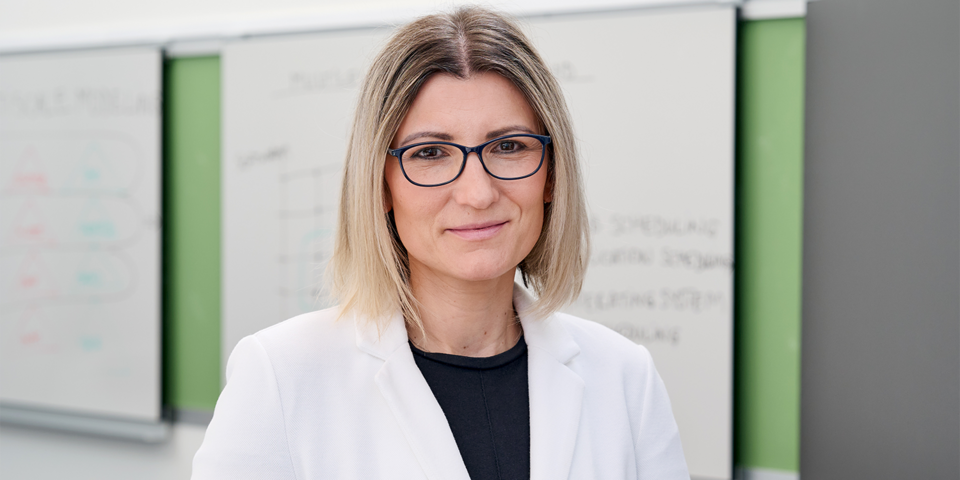
The inaugural SCW75 honours the infrastructure leaders, informatics specialists and simulation experts shaping the future of scientific computing.
Scientific computing is no longer confined to specialist computing centres. Across laboratories, engineering teams, pharmaceutical companies and research-intensive industries, advanced computing infrastructure is becoming central to how discovery, simulation and innovation are delivered.
Today, Scientific Computing World launches the inaugural SCW75 — a new recognition programme celebrating 75 of the most influential figures driving this transformation.
Bringing together leaders from high-performance computing (HPC), AI infrastructure, simulation, laboratory informatics, computational engineering and research computing, the SCW75 highlights the individuals translating increasingly complex technology into practical scientific and engineering outcomes.
The launch comes at a time of unprecedented investment across AI and scientific computing infrastructure. According to Hyperion Research, the HPC, AI and technical computing market grew by 23.5% in 2024 and is projected to exceed $100bn by 2028. Intersect360 Research reported that the worldwide market for accelerated and high-performance infrastructure serving AI workloads reached $193bn in 2024, up 121% year-on-year.
Across industries, organisations are grappling with the realities of scaling AI and HPC infrastructure while maintaining usability, governance, reproducibility and sustainability.
The SCW75 survey found that 57% of respondents expect scientific computing investment to increase over the next year, with many already managing infrastructure projects worth several million pounds. But as budgets rise, expectations are rising with them.
Florina Ciorba, Professor for High Performance Computing at the University of Basel in Switzerland, emphasises the importance of working at the boundary between theory and practice:
“Addressing real-world challenges, building inclusive communities and maintaining a commitment to openness and reproducibility are key to lasting impact. Seeking diverse mentorship and perspectives”, she adds, “can also play a crucial role in shaping a successful career.”
The programme also reflects how scientific computing is increasingly converging across disciplines. Bioinformaticians, automotive engineers, semiconductor researchers, computational chemists and simulation specialists may work in different sectors, but they now share common infrastructure demands: scalable compute, high-performance storage, workflow orchestration, trusted data management and AI-enabled software platforms.
In engineering, simulation and digital design are becoming increasingly central to product development. In life sciences, AI and computational methods are transforming genomics, drug discovery and laboratory workflows. Meanwhile, cloud computing, GPUs and accelerated infrastructure are reshaping how organisations approach research at scale.
Sunita Chandrasekaran, Director of the First State AI Institute at the University of Delaware, emphasises the importance of interdisciplinary thinking.
“Building effective tools requires not only technical expertise but also a clear understanding of end users and real-world applications. In her view, long-term impact comes from designing systems that are both powerful and accessible.”
As scientific computing expands across disciplines and application domains, attention is increasingly turning from raw performance to questions of scalability, usability and long-term sustainability.
Yet the SCW75 reveals that the challenge facing scientific computing is no longer simply about building larger systems.
As Sadaf Alam, Chief Technology Officer and Director of Advanced Computing Strategy at the Bristol Centre for Supercomputing, University of Bristol, explains:
“The most significant challenge in scientific computing today is not technical; it is architectural and strategic.”
The inaugural SCW75 features honourees from 14 countries across North America, Europe, Asia and the Middle East, reflecting the increasingly global nature of scientific computing leadership. The United States leads the list with 31 honourees, followed by the United Kingdom with 21 and Germany with 10.
The programme also highlights the growing contribution of women across scientific computing, simulation and HPC leadership. Women represent 31% of the inaugural list — a figure Scientific Computing World hopes will continue to grow in future editions.
Robert Roe, Editor of Scientific Computing World, said:
“Scientific computing has become one of the defining enabling technologies of modern research and engineering. The SCW75 exists to recognise the people making that infrastructure usable, scalable and impactful across industry and academia. These are the individuals helping turn computational investment into scientific progress.”
For more information, visit Scientific Computing World