

/ Angeliki Karalia
Interdisciplinary collaboration builds TRUST
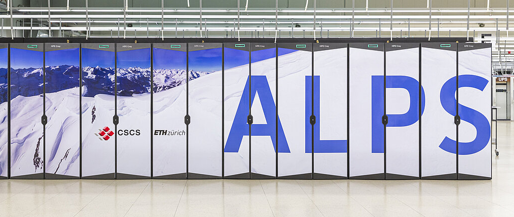
Computational resources are the backbone of world-class research and innovation, and Switzerland is home to one of the most powerful supercomputers in the world: Alps. Currently ranked 8th on the TOP500 list, Alps provides state-of-the-art infrastructure and support for cutting-edge research across a wide range of disciplines. Access to such a resource is essential for advancing fields in which the scale and complexity of numerical simulations would otherwise remain out of reach. Computational astrophysics is one such example, where extremely demanding simulations on supercomputers are not the exception, but the rule.
Although exascale computing is now a reality, with four systems worldwide having crossed the exascale threshold (more than 1018 floating-point operations/s), only a limited number of scientific application codes are able to exploit such computational power efficiently. With this challenge in mind, the SPH-EXA simulation framework effort began in 2016 as an interdisciplinary co-design project to develop an exascale-ready astrophysical code for simulations of hydrodynamics and self-gravity.
This project builds on a long-standing collaboration between Prof. Florina Ciorba (HPC group at the DMI) and Dr. Rubén Cabezón (sciCORE/CeDA), which began almost serendipitously during Prof. Ciorba’s inaugural lecture and grew into a trusted interdisciplinary partnership at the interface of computer science and astrophysics. Over the years, this successful collaboration has led to two PASC-funded projects (in collaboration with Prof. Lucio Mayer from the University of Zurich and CSCS engineers), participation in the Swiss consortium to the Square Kilometre Array Observatory (SKACH), and several highly competitive computing allocations. These include a major EuroHPC Extreme Scale award on LUMI (GPU partition) in 2023–2024 and, more recently, a CHRONOS Tier-0 allocation on the Alps system (Daint vCluster) at the Swiss National Supercomputing Centre (CSCS). Such awards are extremely selective and highlight the scientific achievements of the team, the ambition of the project, and the strength of interdisciplinary collaboration at the University of Basel.
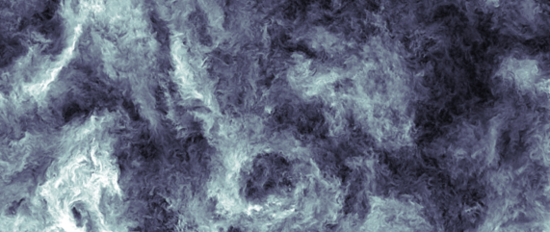
TRUST (Turbulence Research Using SPH-EXA Technology) is the current CHRONOS project awarded to the SPH-EXA team from January to December 2026. The project focuses on turbulent mixing in stellar environments to improve the understanding of the striking chemical homogeneity observed in stellar clusters. Beyond its astrophysical relevance, TRUST also serves as a large-scale benchmarking opportunity for SPH-EXA itself, generating performance data that helps identify and characterize load imbalance at extreme computational scale. This is particularly important because turbulence simulations are among the most demanding in computational astrophysics. They require very high resolution to resolve fine-scale structures, strict control of numerical dissipation, and sustained accuracy over long physical times, making them exceptionally intensive and challenging to compute. With access to Alps through the CHRONOS program, the SPH-EXA team can now pursue, as part of the TRUST project, simulations at a scale and fidelity that would not be feasible on more conventional high performance computing systems.
For the University of Basel, this project illustrates how progress at the frontiers of science increasingly depends on both access to advanced computational resources and close interdisciplinary collaboration. The awarded CHRONOS allocation (150,000 node hours, with an estimated monetary value of 427,500 CHF) highlights not only the scientific strength of TRUST, but also the importance of bringing together expertise in computer science, high performance computing, numerical methods, and astrophysics.
Together, Ruben Cabezon, Florina Ciorba, and the SPH-EXA team will continue to push the frontiers of scientific understanding of our universe and the limits of cutting-edge supercomputer performance.